Surface energy
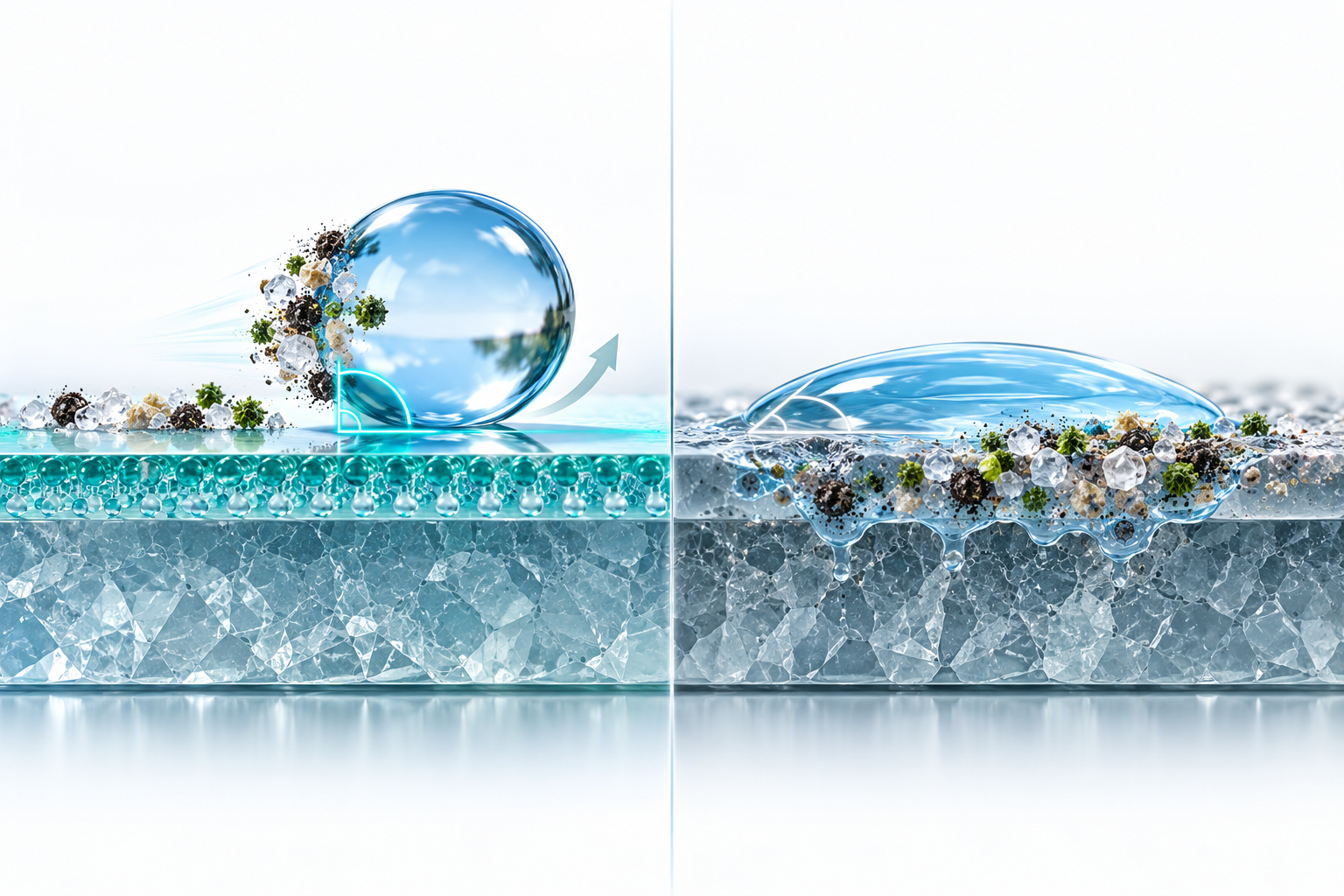
Surface energy helps determine whether water spreads across the material or gathers into a bead. LOTUS lowers the energy of the treated interface.
Nanotechnology, surface preparation and certified application
LOTUS treatments work at the interface between a building material and its environment. The technology changes how water wets the surface, but the mechanism and field procedure must be matched to the exact substrate. Glass, metal, stone, concrete, wood and fabric are not prepared or treated as though they are the same material.
Discuss a substrate or project
The microscopic surface
Even polished glass and finished metal contain microscopic peaks and valleys. Porous stone, concrete, wood and fabric add microscopic pores, capillaries or spaces between fibers. Those features influence how water spreads, where it remains and how dissolved salt, minerals, soil and organic contamination are deposited.
Surface energy helps determine whether water spreads across the material or gathers into a bead. LOTUS lowers the energy of the treated interface.
As the contact angle increases, the droplet stands higher and touches less of the surface. Less wetting means a smaller liquid-to-substrate contact area.
On dense surfaces the treatment bonds at the exposed interface. On porous materials, nanoscale active ingredients can also enter microscopic pores and capillaries.
Tighter moving droplets can carry loose soil, while salt, mineral residue and grime have less opportunity to remain as a broad dried deposit.
A bonded hydrophobic interface
The manufacturer technical data describes nanoscale active ingredients, very low surface tension, substrate bonding and rapid water beading. LOTUS does not depend on building a visible paint-like film. On compatible dense materials, the treatment bonds at the exposed surface. On porous materials, the chemistry is designed to penetrate microscopic pores or spaces between fibers before bonding or adhering within the substrate.
That distinction is important. The visual appearance remains the architectural material itself, while the treated interface behaves differently when it encounters water. Product selection, absorption, application quantity, excess-material control and cure therefore vary by substrate.
One principle, different substrate behavior
Each LOTUS system uses the same maintenance-reduction objective, but the route to a hydrophobic surface is different.
Surface preparation and application
A treatment cannot bond to glass or penetrate stone when oil, silicone, wax, soap film, mineral scale, prior repellents or construction residue stand between the chemistry and the material. For that reason, professional application begins with condition review and decontamination, not with the bottle.
Confirm the material, exposed finish, existing coatings and any specialty surface that requires compatibility review.
Record scratches, etching, corrosion, biological growth, failed sealants, mineral damage and other conditions that treatment will not repair.
Rinse away sand, salt and loose soil before wiping so abrasive particles are not dragged across glass, metal or polished finishes.
Remove oils, wax, silicone, soap film, prior repellents, hard-water scale, construction residue and every trace of cleaning chemistry.
Confirm the surface and adjacent construction are fully dry, then complete a representative test area through the full cure period.
Install the substrate-specific treatment, control excess material, protect the cure and verify the finished hydrophobic response.
LOTUS Glass field example
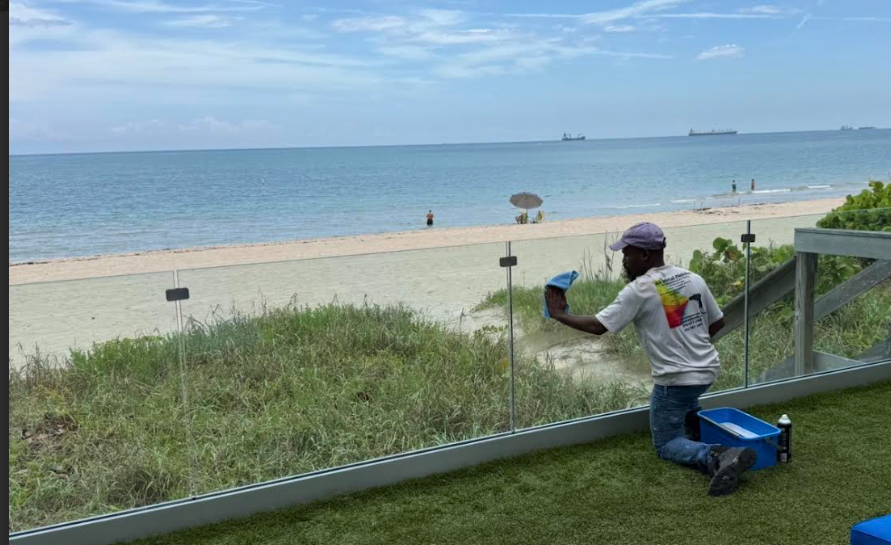
Current LOTUS Glass guidance calls for known, compatible glass that is completely clean and dry, with air and glass temperatures between 60°F and 90°F. A representative area is prepared, treated and evaluated before full production. The product is applied lightly, approximately one to two trigger sprays per 10 to 11 square feet, worked across the glass with clean lint-free microfiber and polished until fully transparent with no haze, streaking or residue.
The treated glass is then protected from rain, washing, sprinklers and condensation for a minimum of 24 hours. After cure, clean water is used to verify that it beads and moves rather than remaining as a continuous sheet. Other LOTUS systems use different quantities, saturation methods and cure windows based on material density and absorption, so the current system-specific TDS and application guide always control.
Professional-use systems
LOTUS supports trained applicators with substrate-specific preparation, application, cure and maintenance guidance. For specification assistance, project pricing, product distribution or applicator training, speak with LOTUS before selecting the system.