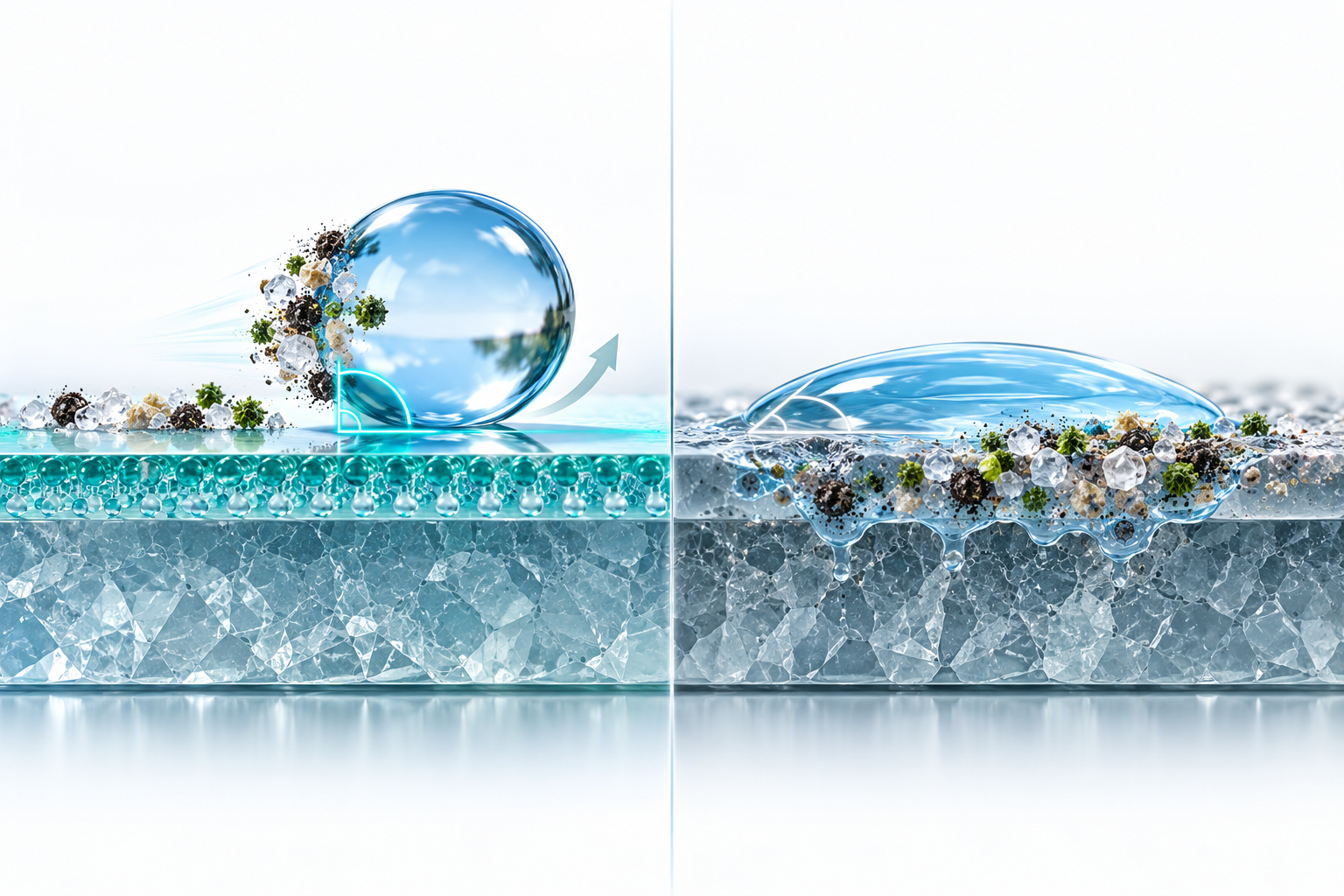
The cured treatment changes the glass-water interface.

Professional hydrophobic treatment for architectural glass
LOTUS Glass
An invisible, non-film-forming treatment for windows, doors, curtain wall, storefront, skylights, glass railings, canopies and exterior glazing. Once cured, LOTUS changes how water interacts with the glass so less of the surface is wetted and common environmental deposits are easier to release during routine care.
Call for pricing & distributionThe science of the treated surface
LOTUS changes the interface between water and glass.
Glass may look perfectly smooth, but at a microscopic scale it contains peaks and valleys that influence how water spreads and where dissolved minerals, salt and soil can remain after evaporation. LOTUS Glass creates a clear, non-film-forming hydrophobic interface that bonds at the glass surface. It lowers the treated surface energy and increases the water contact angle, encouraging water to gather into tighter droplets instead of flattening into a broad film.
The result is less liquid-to-glass contact and less opportunity for waterborne residue to cover the surface. When rain, a hose rinse or purified-water cleaning moves across treated glass, droplets can carry loose contamination with them. Deposits that remain are generally easier to release with non-abrasive tools and milder cleaning methods, which is why LOTUS functions as both a protective treatment and a practical maintenance-reduction system.
Water forms a tighter bead with less contact area.
Salt, minerals and grime are less able to remain as a broad dried film.
Why treat architectural glass?
Clarity is not a one-time finish. It is a maintenance demand.
Exterior glazing is repeatedly exposed to rain, irrigation, hard-water minerals, salt-bearing moisture, airborne soil, oils and organic contamination. On untreated glass, water can spread into a broad film and leave deposits behind as it evaporates. LOTUS Glass creates a clear, non-film-forming treatment that bonds at the exposed glass surface and increases the water contact angle. Tighter droplets mean less liquid contact with the glass and a surface that is easier to rinse and maintain.
Higher contact angle
Encourages water to gather into tighter beads rather than covering the glass as a broad film.
Easier cleanability
Helps reduce the effort required to release common environmental deposits and residue.
Optical clarity
Applied as a transparent treatment so the view, reflectivity and architectural intent remain the focus.
Gentler recurring care
Supports lower-force maintenance methods that are better aligned with premium glazing.
Beyond windows
Glass railings and skylights are often the hardest glazing to maintain.
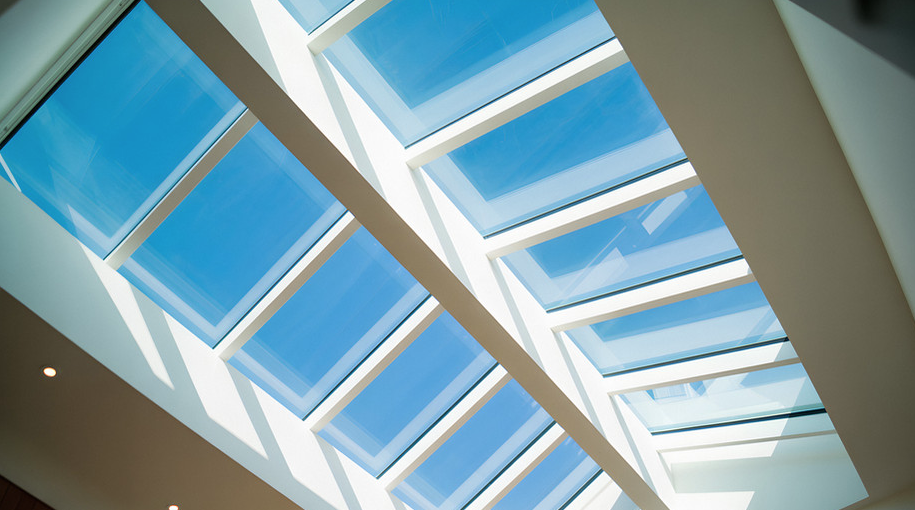
Horizontal and inclined glass catch runoff, dust and mineral-bearing water. Railings add fingerprints, salt exposure and constant visual scrutiny at eye level. Treating these assemblies at installation, restoration or turnover creates a more manageable cleaning plan from the beginning. Where rain cannot reach, routine hose-downs or purified-water cleaning can become more effective with less scrubbing.

Professional application process
The treatment performs only when the glass is correctly prepared.
LOTUS is applied in a very light, controlled amount. The real work is identifying the glazing, removing every incompatible residue, establishing a test area and protecting the surface through cure. Certified applicators manage the complete sequence rather than treating application as a simple spray-and-wipe service.
- 01
Identify and document
Confirm the exposed glass surface and record scratches, etching, mineral damage, sealant residue, failed gaskets or specialty factory coatings before work begins.
- 02
Prepare and decontaminate
Remove loose sand and salt, then clean away oils, silicone, wax, soap film, prior repellents, hard-water scale and construction residue. A final DI or RO rinse is preferred.
- 03
Test the complete system
Treat a small representative area, protect it for 24 hours and verify compatibility, optical clarity and hydrophobic response before full production.
- 04
Apply and polish clear
Install the treatment in manageable sections with clean materials, distribute it evenly and continue polishing until the glass is fully transparent with no haze, streaking or residue.
- 05
Cure, verify and hand off
Keep the glass dry and undisturbed for at least 24 hours, verify water beading after cure and provide the owner or maintenance team with the correct non-abrasive care procedure.
Professional product formats
Choose the package that fits the work.
LOTUS Glass is available in a 32 oz spray bottle for smaller jobs and focused applications, or a 4 L container for larger project quantities. Five-gallon totes will be offered soon for high-volume projects and distribution partners.
Spray bottle
Project container
Bulk tote
Technical planning window
Documented information for estimating and field control.
These figures summarize the current LOTUS Glass technical and application guidance. Actual yield and service interval depend on surface condition, exposure, preparation, installation and maintenance.
Specialty, coated or otherwise modified glass requires compatibility review. Always establish a representative test area before full production.
Professional installation
A better treatment begins with a better process.
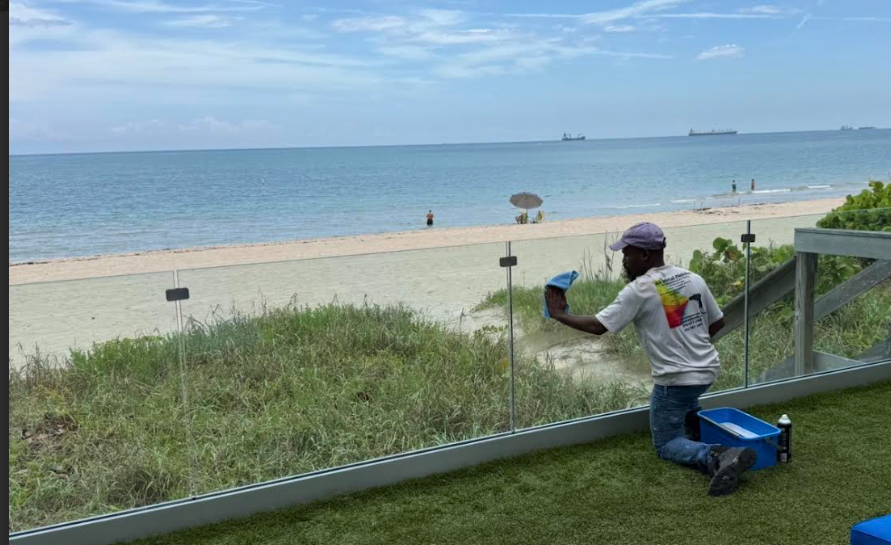
LOTUS Glass is supplied as professional-use technology. Certified applicators receive training, application procedures, technical support and project guidance so preparation, coverage, finishing and cure are managed as part of one system.
Certified Applicator Program