
01
Water beads
Less surface wetting and less contact area for waterborne deposits.
Hydrophobic nanotechnology for the built envelope
LOTUS is a family of professionally applied surface treatments for glass, stone, concrete, wood, metal and exterior fabric. Each system changes how water and common contaminants interact with its substrate, helping important façades stay cleaner between service cycles and making routine care less aggressive.
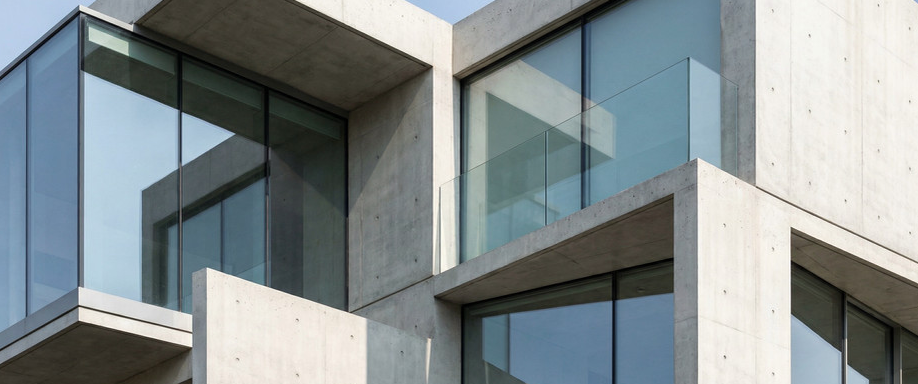


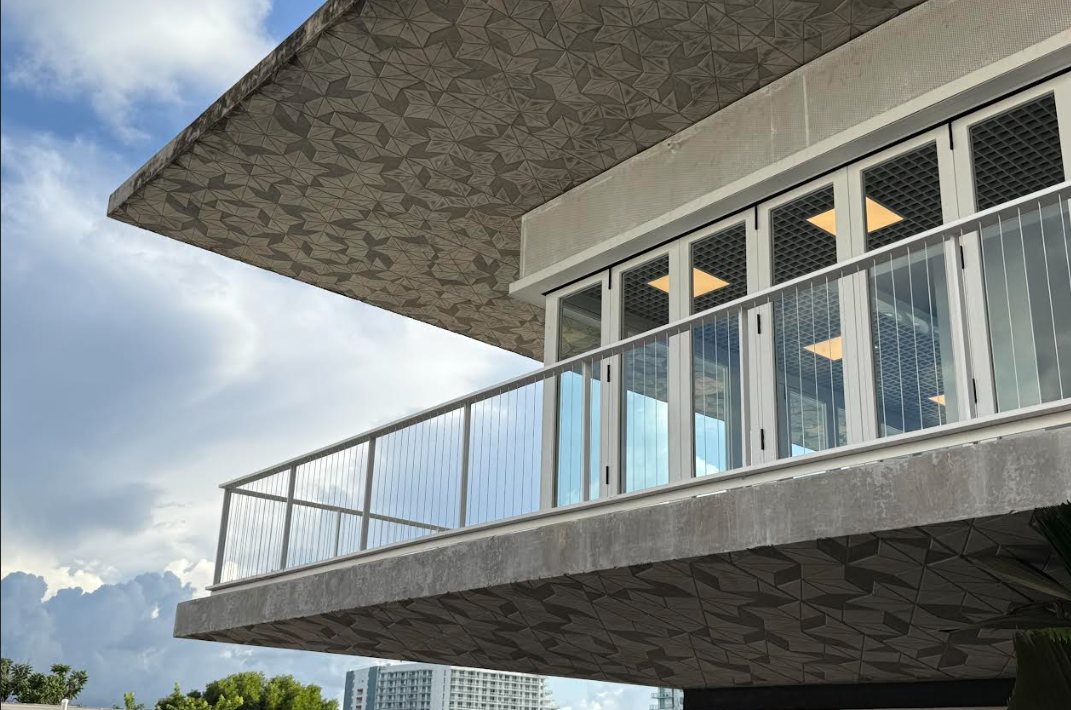
A different surface interaction
On an untreated surface, water can wet a larger area and spread into a continuous film. Once LOTUS cures, the invisible, substrate-bonding treatment lowers the surface energy and increases the water contact angle. Water gathers into tighter beads with less contact area against the material.
That smaller contact area matters. Salt, hard-water minerals, atmospheric grime, oils and organic debris have less opportunity to settle into microscopic pores or the peaks and valleys of the substrate and remain after evaporation. When rainfall or a controlled rinse reaches the surface, moving droplets can also carry loose contamination away.
Contact angle · surface energy · contaminant release
The treatment creates a bonded, visually unobtrusive hydrophobic interface at the substrate surface, but the change in water behavior is easy to see. A higher contact angle means less wetting; less wetting creates fewer opportunities for waterborne deposits to spread, dry and anchor to the surface.
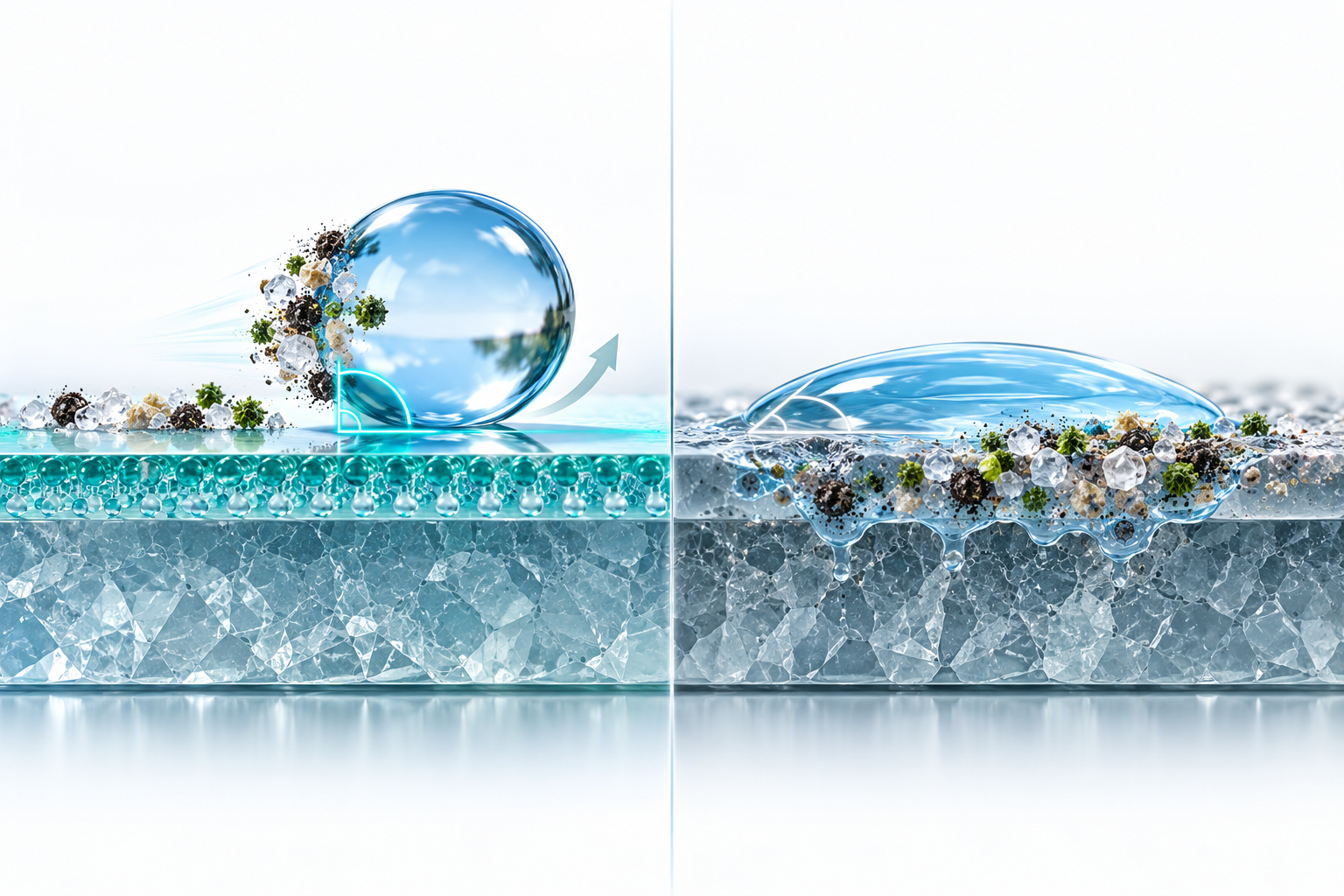 Bonded hydrophobic surface treatmentWater spreads across microscopic peaks, valleys and pores
A maintenance-reduction system
Façades often enter a costly cycle: water remains on the surface, contamination builds, the cleaning interval shortens and crews compensate with harder scrubbing, stronger chemistry, repeated soft washing or higher pressure. Those methods can place additional wear on coatings, sealants, joints, polished finishes and porous materials.
LOTUS changes the starting condition. By reducing wetting and contaminant adhesion, it can help extend the clean-looking period between visits and make ordinary maintenance more effective. In suitable exposures, rain, a garden-hose rinse or low-pressure purified water may release loose soil that would otherwise demand more labor and force. Scheduled cleaning still matters, but the surface is easier to bring back.
Damp, shaded and low-UV areas are especially vulnerable to persistent moisture, grime and organic growth. LOTUS is not a biocide; its value is reducing water retention and making the surface less hospitable to buildup, while helping mold, algae and soil release more readily during planned care.
Less surface wetting and less contact area for waterborne deposits.
Rainfall or a controlled rinse can carry movable salt, dust and grime away.
Many deposits release with less scrubbing, pressure and aggressive chemistry.
A more controlled maintenance cycle supports the surface selected by the design team.
One envelope. Six dedicated treatments.
Glass does not behave like stone. Concrete does not behave like fabric. LOTUS matches its treatment, preparation and care protocol to the substrate instead of offering one universal liquid for everything.
Windows, doors, curtain wall, skylights, glass railings, canopies and exterior glazing.
Explore the systemGranite, limestone, marble, travertine, façade cladding, coping and architectural stone.
Cast-in-place, precast, béton brut and unfinished architectural concrete.
Trellises, gates, fencing, lattice, screens and exterior architectural wood.
Stainless steel, selected finished metals and sublimated wood-grain components.
Awnings, canopies, dividers, cushions and selected exterior textiles.
LOTUS Glass product formats
A convenient ready-to-use format for small areas, mockups and focused applications.
Our primary format for larger residential, commercial and façade applications.
A planned bulk option for large projects, distributors and trained application teams.
From monuments to private estates
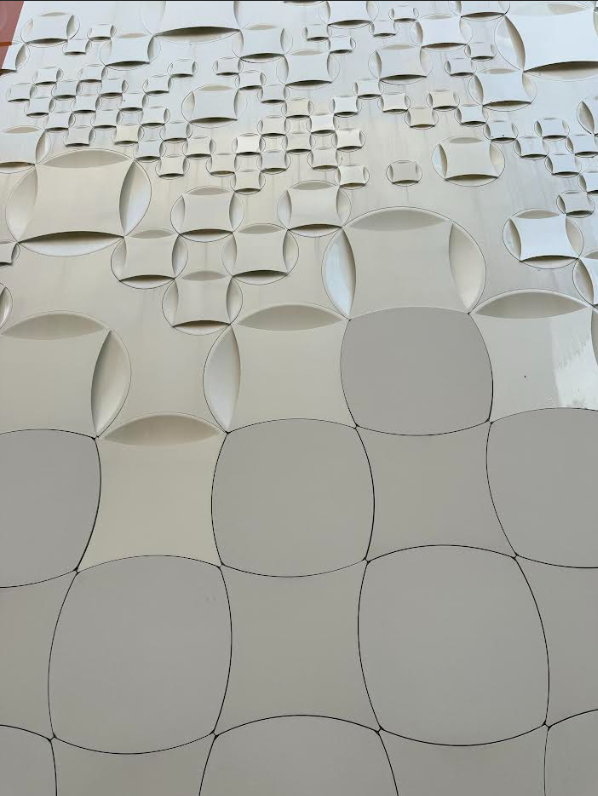
LOTUS belongs on high-value exterior surfaces where appearance, access and long-term care matter: curtain wall and skylights, sculptural concrete, stone cladding, architectural metal, wood screens, glass railings and exterior textiles.



Certified application
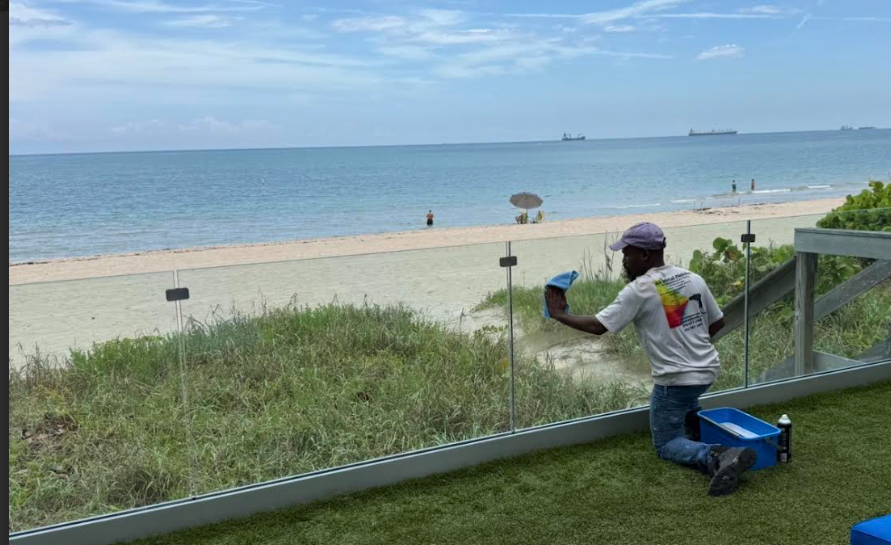
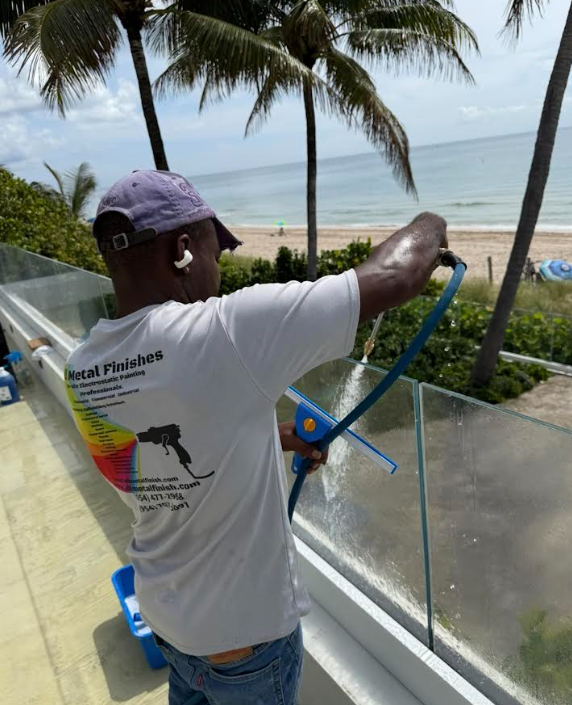
LOTUS trains certified applicators to identify the substrate, document its condition, establish a representative test area, remove incompatible residue, apply the correct system and protect the cure. Preparation and technique determine whether the result is clear, consistent and ready for a real maintenance program.
Explore applicator trainingSurface science and field procedure

Project · Distribution · Training
Share your property, surfaces and goals with our team for product selection, project pricing, mock-up support, distribution opportunities or Certified LOTUS Applicator training.